On this page (20 sections)
- What mulch and bed care covers
- Getting depth and placement right
- Organic mulch or rock
- Mulch near oaks
- Free mulch from the city
- Bed care through the year
- What mulch installation costs
- Weeds and weed control
- Questions to ask the provider
- Choosing a mulch
- Spreading mulch, step by step
- Working out the yardage
- Mulch and watering
- Common mistakes
- Refreshing beds year to year
- When to mulch
- Bed types and mulch needs
- Mulch near the house
- Colored and specialty mulch
- Related services
What mulch and bed care covers
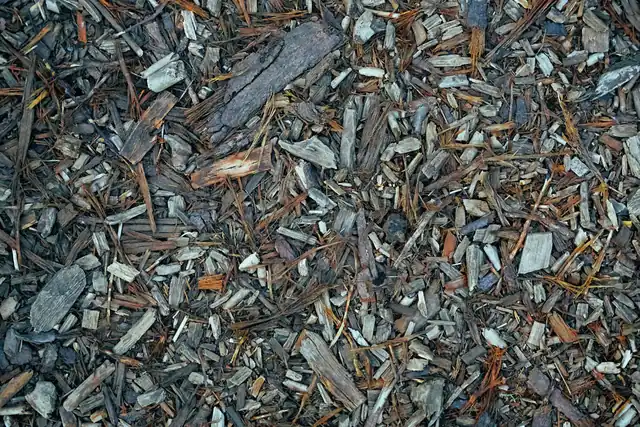
This service typically includes clearing weeds and old debris, edging the bed, spreading new mulch to the right depth, and pulling it back from stems. Bed care adds seasonal tasks: weeding, trimming spent flowers, dividing perennials, and replacing dead plants. This page is information only. The operator of this site, VVDH, is not a landscaper and does not spread mulch.
Getting depth and placement right
TWDB advises applying mulch around trees in a V shape, thicker away from the bark.[1] That keeps moisture from rotting the trunk base. Piling mulch against a trunk (a "mulch volcano") invites rot and pests.
- Depth: three to four inches in beds.
- Around trees: thinner at the trunk, thicker toward the drip line.
- Around shrubs: keep it off stems.
- Refresh: top up as it breaks down, rather than adding a new thick layer on old.
The city's tree-protection spec takes this to an extreme where fences are built closer to construction. It calls for organic mulch eight inches deep over unprotected root zone areas.[3] That is for protection during building, not a model for a normal bed.

Organic mulch or rock
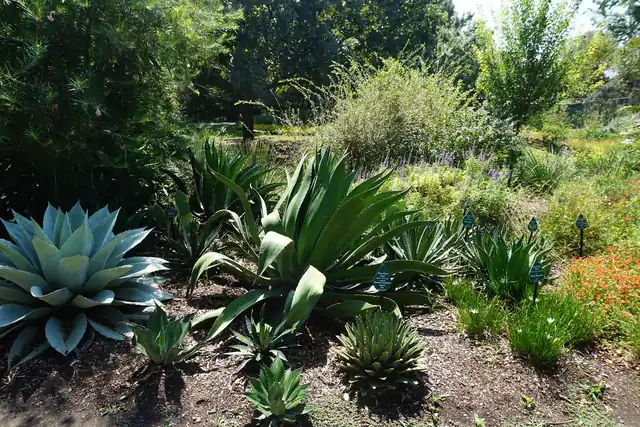
Organic mulch such as shredded wood, bark or compost feeds the soil as it breaks down. TWDB notes that organic mulch enriches the soil.[1] Rock and gravel last longer and suit dry, xeriscape-style beds, but they do not improve the soil and can hold heat. See rock and gravel landscaping to compare.
Where plants are tender or beds are against a hot wall, organic mulch usually keeps roots cooler. NOAA normals show 21.4 days a year at 100 F or more, so cooler soil matters.[4]
Mulch near oaks
Never wound an oak while mulching. Texas A&M Forest Service advises avoiding pruning or wounding oaks from February through June.[5] It warns that any new wound can be an oak wilt entry point.[5] Pull mulch by hand or with a rake near trunks rather than a string trimmer or edger. Bed edges near oaks should not cut roots.
Free mulch from the city
San Marcos holds a brush drop-off on the second Saturday of each month for residential garbage customers.[6] The material is mulched, and residents can pick up free mulch there.[6] The site at 750 River Road runs 8 am to 1 pm, and the last two dates listed for 2026 were Nov 14 and Dec 12.[6] There is a catch for hired work: commercial material is not accepted at the drop-off, so a crew cannot use it for customer yards.[6]
If you want to save money, you can pick up free mulch yourself and ask the provider to spread it, if they agree. The provider would otherwise buy mulch.
Bed care through the year
- Late winter: clean beds, cut back dormant perennials, check mulch depth.
- Spring: refresh mulch, fertilize based on a soil test, replace winter losses.
- Summer: weed regularly, check for leaks, water within the city's current limits.
- Fall: leaf cleanup, plant natives, divide perennials.
Drought stages are watering-limit levels that tighten as aquifer levels drop. As of November 2026, San Marcos is in Stage 3. Drip and soaker lines run one day per week, before 10 a.m. or after 8 p.m.[7] Hand-held hose watering is allowed any day in those hours.[7] Mulch makes each watering last longer.
What mulch installation costs
These are national figures, not San Marcos prices. One national source (April 2025) lists mulch at $25 to $100 per cubic yard for materials only.[2] Delivery plus installation runs $50 to $150 per cubic yard.[2] That guide's chart shows one cubic yard covering 108 square feet at three inches deep, and five yards covering 540.[2] So a 500 square foot bed needs about five yards.
Cost depends on mulch type, depth, bed size, how much old mulch must be removed, access for a wheelbarrow and weed clearing first. Landscapers bill $50 to $100 an hour nationally.[8] Ask for a price per yard and the yardage estimate.
Weeds and weed control
Mulch is the first line of defense. Texas law requires a Texas Department of Agriculture license to apply any pesticide to lawns, trees, ornamentals or weeds for hire.[9] This site does not arrange pesticide, herbicide or weed-control work; if you hire anyone for it, ask for the license and the product name.
Questions to ask the provider
- What type of mulch, and how many cubic yards?
- What depth will you spread?
- Will mulch stay clear of trunks and stems?
- Is weed clearing included, and is it done by hand?
- Who hauls leftover material?
Choosing a mulch
Mulch falls into two families. AgriLife lists organic mulches such as pine bark, compost and woodchips, and inorganic ones such as lava rock and limestone.[10] Organic mulch adds organic matter as it breaks down.[1] AgriLife says organic matter in shrub and flower bed soil makes plants healthier.[10] TWDB suggests picking a mulch made from native sources.[1]
Shredded hardwood or bark knits together and stays put on a slope. Chunky nuggets float and wash in a storm. Compost feeds the soil fastest but breaks down quickly and can invite weed seed. Ask the provider what product they plan to use and where it comes from. Avoid mulch that smells sour, which can mean it has been stored wet.
Spreading mulch, step by step
- Clear the bed. Pull weeds by the roots, since mulch only smothers small seedlings.
- Define the edge. A spade-cut line or border keeps mulch where you want it.
- Check the soil. If it is bone dry, water first so mulch does not shed rain.
- Spread an even layer. Use a wheelbarrow and a rake, working from the middle of the bed outward.
- Pull it back from stems and trunks. Leave a clear ring around each plant.
- Shape the layer. Taper it thinner near trunks and thicker out toward the dripline.
- Clean up. Sweep or blow stray mulch off paths, walls and the driveway.
AgriLife's Xeriscape guide says mulch reduces weeds, prevents soil compaction and keeps soil temperatures more moderate.[10] Each of those benefits depends on getting the layer even, so check for thin patches before the crew leaves.
Working out the yardage
Mulch is bought by the cubic yard, and the number is easy to calculate. Multiply the bed's area in square feet by the depth in feet, then divide by 27. A national guide's coverage chart is a handy check: one cubic yard covers 108 square feet at a depth of 3 inches.[2] Ask the provider to show their math, and to say whether it assumes fresh mulch on bare soil or a top-up over an existing layer. Over an old layer, you need less.
Mulch and watering
Mulch pays off at the hose. TWDB says established plants do well in summer on watering about once a week when mulch is placed around them.[1] It adds that deep, infrequent watering builds deep, well-established roots.[1] Vegetable gardens get special treatment under Stage 3: the city allows watering them by hand, soaker or drip on any day at any time.[7] Mulch helps there too, by holding moisture between waterings and keeping fruit off bare soil.
Common mistakes
- Piling mulch against trunks and stems, which holds moisture on the bark.
- Spreading it too thick, so water runs off instead of soaking in.
- Adding a fresh layer on top of a thick, matted old one.
- Skipping weed removal and expecting mulch to do it.
- Spreading it against siding or over vents.
- Using fabric under mulch in planted beds, where roots and weeds tangle in it.
- Letting it wash onto sidewalks and into the street.
Refreshing beds year to year
Organic mulch breaks down, so the layer thins each year. In late winter or spring, rake the old layer loose, check the depth and add only what is needed to return to the target. Do not smother the base of plants with the new material. A provider who comes once or twice a year can do this along with weeding. That keeps beds tidy for less than a full re-do would cost.
When to mulch
Spring, after the soil warms, is a common time because mulch then holds moisture through summer. Fall mulching protects roots before the cold. NOAA normals show about 19.8 nights a year at or below 32 F, so a layer in place by late fall helps tender roots.[4] Mid-summer works too, as long as the ground is damp when the mulch goes down.
Bed types and mulch needs
- Shrub and tree beds: a wide ring, thin at the trunk.
- Perennial beds: a thinner layer so crowns can breathe.
- Vegetable beds: a straw or leaf layer between rows, refreshed each season.
- Slopes: shredded material that locks together, and a border at the bottom.
- Under oaks: shallow mulch that does not mound against the bark.
Match the product and the depth to the bed, and get both on the price sheet before the work starts.
Mulch near the house
Keep mulch a hand's width away from siding, vents and wood trim. A constantly damp layer next to a wall invites rot and pests. Do not cover weep holes or block the flow of rain away from the foundation. Where a bed slopes toward the house, grade it so water goes away first and add mulch second. If a landscape provider offers to put mulch against the house to "build up" the bed, ask why. Raising soil or mulch above the slab line can send water the wrong way.
Colored and specialty mulch
Dyed mulch is sold in red, brown and black, and it fades in sun. The dye is cosmetic, so judge the product by what it is made of, not by color. Ask where the wood came from and whether the product is shredded hardwood, bark or recycled material. Some bagged products are mixed with soil and sand, which makes them heavier. A provider who buys in bulk can usually show you the exact product before it is spread.
Related services
Fresh mulch pairs with landscape edging, tree and shrub planting, and yard cleanup. See the cost guide, questions or home page.
Send a request
Sources
- Texas Water Development Board. Texas Landscape Water Guide, accessed 2026-11-23
- HomeGuide. How Much Does Mulch Cost?, published 2025-04-30
- City of San Marcos. Item 610S Preservation of Trees and Other Vegetation, published 2018-12-07
- NOAA National Centers for Environmental Information. 1991-2020 U.S. Climate Normals, annual/seasonal, San Marcos TX (USC00417983), accessed 2026-11-23
- Texas A&M Forest Service. Prevent the spread of oak wilt this spring in Texas, published 2022-03-29
- City of San Marcos. San Marcos Monthly Brush Drop-Off Event, accessed 2026-11-23
- City of San Marcos. Water & Energy Conservation (Stage 3 watering restrictions), accessed 2026-11-23
- HomeGuide. How Much Do Landscapers Charge to Plant Shrubs, Flowers, and Bushes?, published 2026-02-04
- Texas Department of Agriculture. Applying Pesticides to Ornamentals, Trees, Lawns, or Weeds, accessed 2026-11-23
- Texas A&M AgriLife Extension (Texas Water Resources Institute irrigation site). E-447 Xeriscape: water-efficient landscaping, accessed 2026-11-23