On this page (16 sections)
- What the service covers
- Choosing plants that fit
- Soil and digging in limestone country
- Shrub replacement
- Oak wilt and the pruning calendar
- Mulch and watering after planting
- When to plant
- What planting costs
- Questions to ask the provider
- How a planting day goes, step by step
- Watering through the first two growing seasons
- Keep grass away from the base
- Picking the right plant for the spot
- Mistakes that shorten a plant's life
- Care after the first two years
- Related services
What the service covers
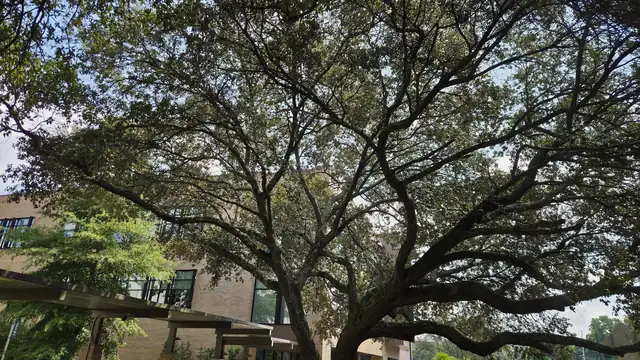
A provider doing tree and shrub planting typically handles plant selection, hole digging, setting the root ball at the right height, backfilling, mulching and first watering. This page is information only. The operator, VVDH, is not a contractor and does no planting. Larger trees may need a crew or a machine.
Choosing plants that fit
Hardiness zone and soil come first. A USDA-based hardiness lookup puts ZIP 78666 in zone 9a, with a listed temperature range of 20 to 25 F.[2] NOAA normals show about 19.8 nights a year at or below 32 F.[3]
AgriLife's regional guide lists native trees including live oak, Spanish oak, little walnut, Texas mulberry, netleaf hackberry and chinkapin oak.[4] It describes Texas mountain laurel as an evergreen shrub or small tree usually 10 to 15 feet tall.[4] Read about native plant landscaping for more options.
Check mature size before buying. A shrub that grows wider than the gap beside a window becomes a pruning job.
Soil and digging in limestone country
Digging in Hays County can be harder than expected. A Texas State University soil survey describes Edwards Plateau soils as mostly stony and over limestone.[5] One map unit in it has rock 13 to 20 inches down.[5] Another soil in it, Anhalt clay, drains very slowly and swells and shrinks.[5] A hole dug into clay can fill like a bowl.
For heavy clay, AgriLife suggests berms or raised beds with sandy soil and some organic matter.[4] TWDB says a soil test is the number one key to establishing landscape plants.[6] Ask the provider how they handle shallow rock and slow drainage, and whether the plant sits slightly high.
Shrub replacement
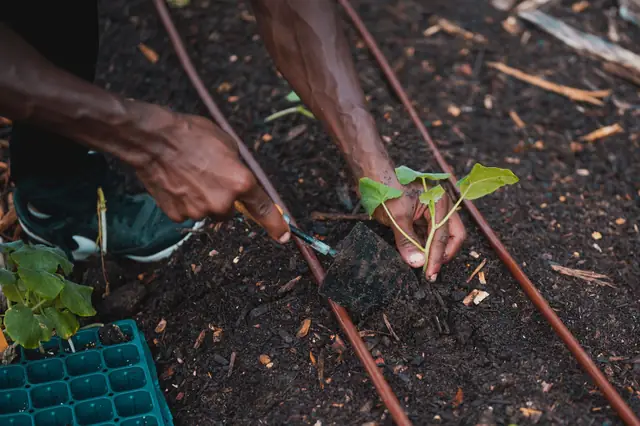
Replacing a dead or overgrown shrub is a smaller job than a new bed, but it follows the same steps: remove the old plant and roots, loosen the soil, set the new shrub at the right height and water it in. One national source, in February 2026, lists shrub or bush planting at $25 to $85 per shrub, a national range.[1] Ask whether removal and hauling of the old plant are in that number.
AgriLife says newly planted trees and shrubs need frequent watering until well rooted, which may take two growing seasons.[7] It also says to apply water from just inside to a little beyond the dripline, not at the trunk.[7] See the landscaping cost page for how published ranges compare.
Oak wilt and the pruning calendar
Any planting near an oak has to respect the oak wilt calendar. The state forest service says to hold off on pruning or wounding oaks from February through June.[8] The city's own spec calls those same months the high-risk window.[9]
Planting creates wounds without anyone meaning to: a shovel through a surface root, a trimmer nick, a limb broken by equipment.[8] Live oaks share the disease through grafted roots, and it travels about 75 feet a year underground.[8] Red oaks can die within a month.[8] Three habits lower the risk:
- Treat any fresh oak wound right away.[9]
- Seal cuts whenever they happen, because fresh wounds attract insects.[8]
- Keep digging and grade changes away from the root zone, and call a certified arborist if you are unsure whether a tree is infected.[8]
Planting near existing trees
The city's spec typically puts protective fencing at the outer limit of the critical root zone. It guards against grade changes of more than 4 inches.[9] On a lot under development, a qualified arborist must supervise pruning under that spec.[9] Even on other lots, avoid trenching through roots for shrub beds.
Mulch and watering after planting
TWDB advises three to four inches of mulch around plants and trees.[6] Apply it in a V shape, thicker away from the bark, so it does not rot the trunk base.[6] See mulch and flower bed care.
New plants need regular water until roots spread. Stages are the levels of watering limits that tighten as aquifer levels drop. As of November 2026, San Marcos is in Stage 3. Drip and soaker lines run one day per week, before 10 a.m. or after 8 p.m.[10] Hand-held hose watering is allowed any day in those hours.[10] Texas requires a licensed irrigator to install or alter an irrigation system for hire.[11] This site does not arrange irrigation work.
TWDB says early morning or late evening is the best time to water because wind is calmer and evaporation lower.[6]
When to plant
Fall is the common choice in Central Texas, since roots grow while tops rest. Spring works, but young plants then meet summer heat; August normal highs are 96.8 F.[12] Avoid planting during a hard freeze or a heat wave. For oaks, schedule any pruning for outside February through June.
What planting costs
These are national numbers, not local prices. A national cost guide (February 2026) lists landscapers at $50 to $100 per hour and $25 to $85 per shrub or bush.[1] The same publisher lists softscaping at $9 to $12 per square foot.[13] Tree size, access, soil amendment and stump or old-plant removal all change the total. Ask for the price per plant, including soil, mulch and haul-away.
Texas treats landscaping as a taxable real property service, so ask whether tax is on the price.[14][15]
Questions to ask the provider
- How will you handle rock or clay at the planting site?
- When will you plant, and what will you do about oak wilt timing?
- What water do the plants need in the first year?
- Is mulch, staking and haul-away included?
- Who would install any irrigation? Texas requires a state-licensed irrigator for that work.[11]
How a planting day goes, step by step
Knowing the sequence helps you spot shortcuts. A careful provider works roughly in this order:
- Locate utilities and mark the spot. Call before any digging, and measure the spot against the plant's mature size rather than its size in the pot.
- Dig wide, not deep. The Texas A&M Forest Service says to dig the hole at least twice as wide as the root ball and no deeper than the root ball.[16] A hole dug too deep lets the plant settle below grade and stay wet.
- Set the plant at the right height. The top of the root ball should sit level with, or just above, the surrounding soil. Cut away wire, twine and tags that could strangle the trunk later.
- Backfill with the soil that came out. For trees, the Forest Service says not to add soil amendments.[16] AgriLife's Xeriscape guide treats beds differently: it says organic matter in shrub and flower bed soil makes plants healthier, but is not needed for trees.[7]
- Water to settle the soil. The Forest Service says to settle the soil with water.[16]
- Skip the stakes unless the site demands them. The Forest Service says to stake a tree only if necessary, and not to leave stakes in place more than one year.[16]
If the crew shows up without a plan for the hole, the backfill or the first watering, ask them to explain it before work starts.
Watering through the first two growing seasons
New plants run on a small root system, so they dry out faster than the lawn beside them. AgriLife's Xeriscape guide says new trees and shrubs need frequent watering until they are well rooted, which can take two growing seasons.[7] After that, water less often so the roots go deep and handle drought.
Where you put the water matters. The same guide says the feeding roots of a tree or shrub sit in the top 12 inches of soil and out at the dripline.[7] Water should land from just inside to a little past the dripline, not at the trunk.[7] It adds that normal lawn watering does not replace a thorough soak for trees and shrubs.[7]
Under drought limits, a hand-held hose or bucket is the flexible tool. In Stage 3, hand watering is allowed any day before 10 a.m. or after 8 p.m.[10] TWDB says to stop when water runs off faster than the ground can take it, then resume once it soaks in.[6] On the limestone-and-clay soils described above, several short rounds with a rest between beat one long blast.
Keep grass away from the base
Turf competes hard with a young shrub. TWDB says clearing grass and weeds from beneath trees and shrubs lets their roots spread more evenly and draw from a larger volume of soil.[6] A wide mulch ring does that job and also keeps mowers and trimmers away from the bark. AgriLife's guide adds that mulch reduces weeds, prevents soil compaction and keeps soil temperatures more moderate.[7] The mulch installation page covers depth and spreading.

Picking the right plant for the spot
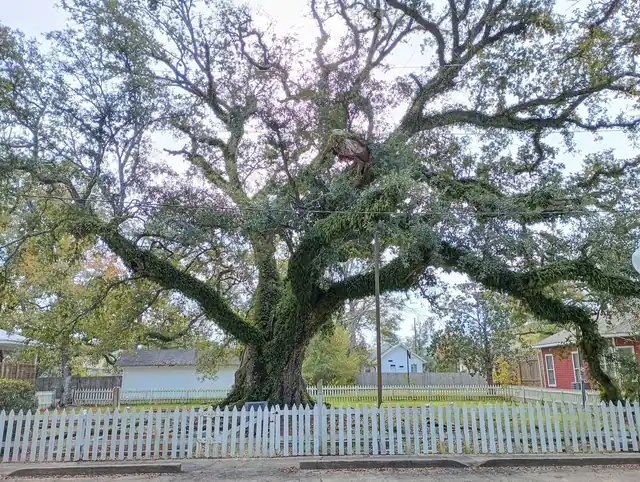
Match the plant to light, drainage and room before you look at price. Some native choices come with a catch. AgriLife notes that pecan and American elm are native but not drought tolerant, so in an average yard they need regular watering.[4] It also warns that flameleaf sumac and western soapberry send up hundreds of root sprouts and will form a thicket unless you want one.[4]
Practical checks at the nursery:
- Read the tag for mature height and width, then picture it beside your fence, wall or window.
- Look for roots circling the pot, a sign the plant has been waiting too long for a bigger home.
- Ask whether the plant came from a Texas grower, since local stock is used to the swings in weather.
- Pick one or two kinds per bed instead of one of everything, which also makes watering simpler.
Deciding between a tree and a shrub? Trees need more room and more patience. A landscape designer can place them so roots stay clear of the foundation, drain lines and neighbors.
Mistakes that shorten a plant's life
- Planting too deep, or leaving the pot's soil line below the surrounding grade.
- Fertilizing and amending the hole heavily, when the soil test points elsewhere.
- Watering the lawn and assuming the shrub got enough.
- Piling mulch against the trunk, which holds moisture on the bark.
- Leaving stakes and ties on until they cut into the trunk.
- Planting in the middle of a heat wave or a hard freeze.
Care after the first two years
Once the roots have spread, a planting needs less from you. Expect occasional deep watering in a dry spell, a refreshed mulch ring, and pruning of dead or crossing wood outside the oak wilt window.[8] AgriLife's guide says that without rain most trees and shrubs benefit from one thorough watering a month in the growing season.[7] Watch for stress signs such as scorched leaf edges, early leaf drop or branch dieback, and have a certified arborist look at anything that spreads. A local provider can set this up as a yearly visit.
Related services
Plantings link to landscape design, mulch and flower bed care and native plant landscaping. See the cost guide, learn hub or home page.
Send a request
Sources
- HomeGuide. How Much Do Landscapers Charge to Plant Shrubs, Flowers, and Bushes?, published 2026-02-04
- phzmapi.org (third-party mirror of USDA plant hardiness zone data). Plant Hardiness Zone Map API, ZIP 78666 (2023 USDA map data), accessed 2026-11-23
- NOAA National Centers for Environmental Information. 1991-2020 U.S. Climate Normals, annual/seasonal, San Marcos TX (USC00417983), accessed 2026-11-23
- Texas A&M AgriLife Extension. Native plants for Edwards Plateau landscapes, published 2023-03-01
- Texas State University (Southwest Texas State University). Soils of the Freeman Ranch, Hays County, Texas (Freeman Ranch Publication Series No. 4-2000), published 2000-07-01
- Texas Water Development Board. Texas Landscape Water Guide, accessed 2026-11-23
- Texas A&M AgriLife Extension (Texas Water Resources Institute irrigation site). E-447 Xeriscape: water-efficient landscaping, accessed 2026-11-23
- Texas A&M Forest Service. Prevent the spread of oak wilt this spring in Texas, published 2022-03-29
- City of San Marcos. Item 610S Preservation of Trees and Other Vegetation, published 2018-12-07
- City of San Marcos. Water & Energy Conservation (Stage 3 watering restrictions), accessed 2026-11-23
- Texas Commission on Environmental Quality. RG-470 Landscape Irrigator's Rule Compilation (Feb 2021), published 2021-02-01
- NOAA National Centers for Environmental Information. 1991-2020 U.S. Climate Normals, monthly, San Marcos TX (USC00417983), accessed 2026-11-23
- HomeGuide. How Much Does Landscaping Cost?, published 2026-02-04
- Texas Legislative Council (Texas Constitution and Statutes). Tex. Tax Code Sec. 151.0048 Real Property Service, accessed 2026-11-23
- Legal Information Institute, Cornell Law School (Texas Comptroller rule). 34 Tex. Admin. Code 3.356 - Real Property Service, accessed 2026-11-23
- Texas A&M Forest Service. Planting, accessed 2026-11-25