On this page (17 sections)
- Sod landscaping: what the job involves
- Choosing a grass for Central Texas
- Installing sod during drought restrictions
- Soil under a San Marcos lawn
- What sod installation costs
- Tax and contract notes
- Questions to ask a sod provider
- After the sod is down
- Sod, seed or plugs
- Preparing the ground, in order
- Delivery and laying day
- The first two weeks
- When to mow and feed a new lawn
- Why new sod fails
- Seasons and freeze risk
- What to ask about the sod
- Related services
Sod landscaping: what the job involves
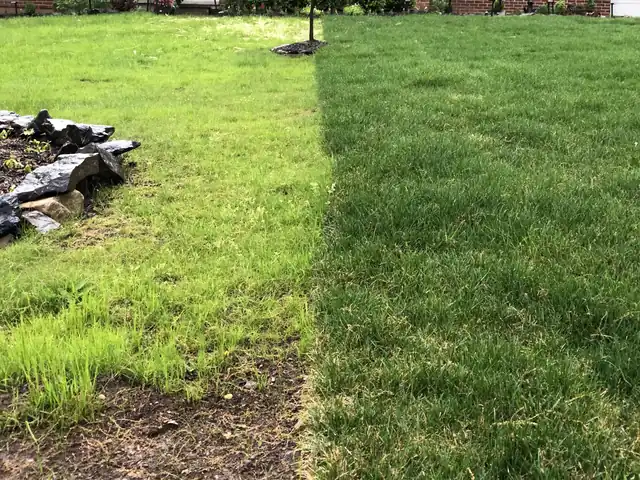
Searches for sod landscaping usually mean replacing a patchy lawn or covering bare ground after construction. This page is information only. The site is designed and maintained by VVDH, which is not a contractor and does not lay sod. A typical job runs in these steps:
- Remove the old lawn or debris if needed, and rough-grade the area.
- Test and amend the soil. TWDB suggests blending topsoil with about 25 percent compost for a new lawn and starting with a soil test.[2]
- Fine-grade so water drains away from the house.
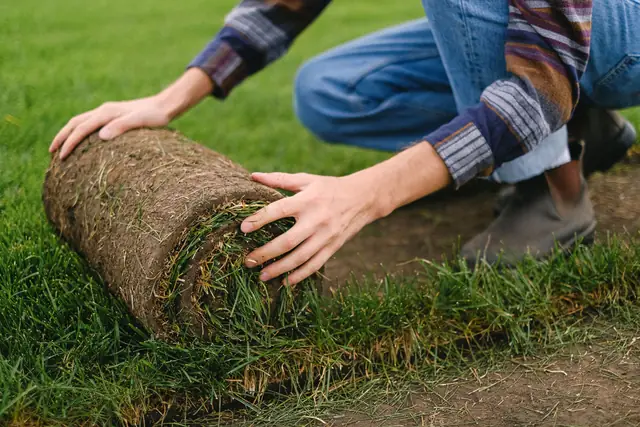
- Lay the sod in staggered rows, tight at the seams, and roll it for contact.
- Water in on the first day, then on a schedule the rules allow.
Skipping the soil step is the usual cause of sod that never roots.
Choosing a grass for Central Texas
AgriLife says turf choice starts with a species suited to the climate. The variety should then suit your shade, soil depth, traffic and irrigation.[3] The common options behave differently:
| Grass | Strength | Watch for |
|---|---|---|
| St. Augustine | Most shade tolerant warm-season turf | Needs more water; established from sod[3] |
| Bermuda | Tolerates drought and traffic | Needs full sun[3] |
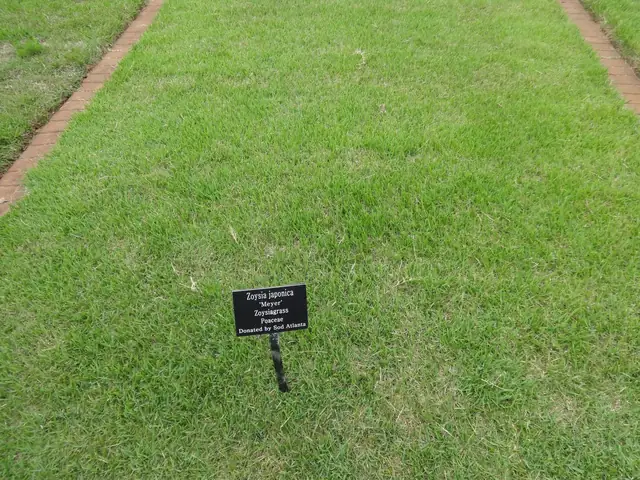
| Zoysia | Drought tolerant, best from sod | Browns sooner than bermuda in long drought[3] |
| Buffalograss | Low-maintenance lawn | Little shade tolerance; weeds invade if overwatered[3] |
TWDB ties the choice to rainfall: Bermuda and zoysia thrive in 25 to 35 inches a year, St. Augustine needs at least 35, and buffalo suits 15 to 25.[2] NOAA normals put San Marcos at 36.55 inches, which is at the edge for St. Augustine in a dry year.[4]
Installing sod during drought restrictions
New sod must stay moist for the first couple of weeks, which clashes with limits written for established lawns. Under Stage 3, as of 2026-11-23, sprinklers run one day every other week.[1] Soaker or drip lines run one day per week, before 10 a.m. or after 8 p.m.[1] Hand watering is allowed any day in the same hours.[1]
Texas A&M and the city do not publish a sod exception in these sources. So the practical choices are to wait for a lower stage, ask the city about a variance, or choose a drought-tolerant grass. Buda, for example, offers a drought variance request form for new landscape irrigation.[5] Ask the city or utility that serves your address.
Timing
Sod can be laid most of the year, but heat stress hurts new roots. Warm-season grasses grow fastest from late spring through summer, and NOAA shows August highs near 96.8 F with more than ten days at 100 F or higher.[6] Many owners aim for spring or early fall, when roots form without extreme heat.
Soil under a San Marcos lawn
Stony ground limits root depth. One map unit in a Hays County soil survey has a limestone layer 13 to 20 inches down and holds limited moisture.[7] Heavy Anhalt clay, a minor soil in the same survey, drains slowly and shrinks and swells.[7] On shallow soil, ask the provider about adding compost and how deep they will loosen the ground.
What sod installation costs
These are national prices, not San Marcos quotes. One national source (October 2025) lists installed sod at $1.00 to $2.00 per square foot for a new lawn.[8] Removing an old lawn and resodding runs $1.50 to $4.00 per square foot.[8] Its material-only prices are $0.30 to $0.80 per square foot for St. Augustine and $0.30 to $0.85 for Bermuda.[8]
What moves the price: lawn size, whether old turf is removed, grading and soil amendment, access for pallets, and the grass. Seeding is cheaper at $0.04 to $0.18 per square foot, but slower and harder to establish.[9]
Tax and contract notes
Texas treats landscaping and lawn care as taxable real property services.[10][11] The Tax Code excludes them when a contractor buys them as part of improving real property with a new residence.[10] The Texas Attorney General advises getting written bids from more than one contractor.[12]
Questions to ask a sod provider
- Which grass, from what farm, and how soon after cutting is it laid?
- How will the soil be prepared and graded?
- What watering schedule do you recommend under current limits?
- Is edging or hauling away old turf included?
- Will sprinkler heads be adjusted, and by whom? Irrigation work requires a state-licensed irrigator.[13]

After the sod is down
Keep foot traffic off for the first weeks. Once roots hold, an AgriLife lawn calendar written for East Texas advises soaking to four inches rather than watering daily.[14] Hold the first mow until the sod resists a gentle tug, and cut at the optimal height for the grass.
Sod, seed or plugs
Sod costs more than seed, but it solves a problem seed cannot. AgriLife says sod gives immediate coverage that keeps soil from turning to dust or mud.[15] That matters on a lot with bare ground, a slope or a rainy season ahead. Seed is cheaper per square foot but leaves soil exposed for weeks, and it is a poor match for some grasses. AgriLife says St. Augustinegrass is established from sod, and zoysia is best established from sod.[3] For those two, the choice is mostly made for you.
Preparing the ground, in order
The sod itself is the easy part. The ground under it decides whether it roots. A careful provider works through these steps:
- Locate lines and heads. Utilities, drain lines and sprinkler heads get marked before any tool goes in.
- Clear the site. Remove old turf, rocks, roots and construction debris.
- Rough-grade. Slope the surface away from the foundation and out of low spots where water would sit.
- Test the soil. TWDB calls a soil test the number one key to establishing landscape plants.[2] It suggests blending about 25 percent compost into topsoil for a new lawn.[2]
- Loosen compacted ground. Hard clay and rocky fill stop roots, so the soil has to be broken up before sod goes down.
- Fine-grade and firm. Rake the surface smooth and level, then roll lightly so footprints do not become dips.
- Leave any sprinkler work to a licensed irrigator. Texas requires a state license to alter an irrigation system for hire.[13]
Ask the provider to describe the soil steps before you sign. If the answer is to lay it straight on the old surface, expect trouble in a dry year.
Delivery and laying day
Sod is a living crop that heats up on the pallet. Careful crews schedule delivery to match their crew size and lay it the same day. Expect this sequence:
- Start along a straight edge such as a driveway or walk.
- Lay each row with seams tight but not overlapping, and offset the ends like bricks so no seam lines up with the next row.
- Cut curves and corners with a sharp knife, and avoid thin strips along edges that dry out first.
- Roll the whole area so the roots touch soil with no air pockets.
- Water right away, before the first pallet of the next job arrives.
A provider who rushes the last pallets on a hot afternoon is trading your sod for their schedule. Ask what time the delivery arrives and how many people will lay it.
The first two weeks
New sod has almost no roots, so it dries out fast. Lift a corner after a few days: you want damp soil underneath and, within a couple of weeks, a slight resistance as roots grip. The tricky part in San Marcos is that Stage 3 allows hand-held hose watering any day before 10 a.m. or after 8 p.m.[1] Sprinklers run only one day every other week.[1] Hand watering a whole new lawn is slow work, so plan for it before laying day.
Stop watering a spot when water runs off faster than the ground takes it in.[2] Once roots hold, switch to deeper, less frequent watering; TWDB advises wetting the soil 4 to 6 inches down to reach plant roots.[2] Water early in the morning, not at night: the East Texas lawn calendar says this cuts down on possible lawn fungus problems.[14]
When to mow and feed a new lawn
Wait for roots before the first cut. Then mow at the height for your grass and follow the one-third rule. TWDB says never to remove more than one-third of the blade at once.[2] For feeding, AgriLife's checklist says the first spring application comes after the second mowing.[16] It limits single applications to 1 pound of nitrogen or less per 1,000 square feet.[16] Hold off on heavy feeding until the soil test and the roots both say the lawn is ready.
Why new sod fails
- Dry seams. Edges and seams dry first, so gaps open and weeds move in.
- Wrong grass for the spot. AgriLife says bermudagrass needs full sunlight, while St. Augustine is the most shade-tolerant warm-season turf.[3]
- Stacked pallets left too long. Sod that sits rolled up can yellow and heat.
- Poor grading. Water pooling at the house or in a low spot rots roots.
- Compacted or stony ground. Roots cannot go deeper than the loosened layer.
- Heavy traffic too soon. Foot traffic shifts sod before roots anchor it.
Seasons and freeze risk
Warm-season grass roots best when soil is warm, which is why many owners choose spring or early fall. NOAA normals show about 19.8 nights a year at or below 32 F.[4] Sod laid late in the year may sit dormant and slow to root. Mid-summer laying means more watering under restrictions. Ask the provider which window they prefer and what they will do if the stage changes between booking and install.
What to ask about the sod
- Which variety is it, and does it suit sun or shade at your address?
- Which farm does it come from, and how soon after harvest will it arrive?
- How many square feet are you ordering, and how much extra for cuts?
- What will you do with leftover pieces and with removed turf?
- Who is responsible for the watering instructions in writing?
A written scope with the grass, the area, the prep and the price on one page avoids most disputes later.
Related services
Sod works with lawn care and mowing, landscape design and edging and bed borders. See landscaping costs, the local rules, or go back to the home page.
Send a request
Sources
- City of San Marcos. Water & Energy Conservation (Stage 3 watering restrictions), accessed 2026-11-23
- Texas Water Development Board. Texas Landscape Water Guide, accessed 2026-11-23
- Texas A&M AgriLife Extension. Turfgrass Selection for Texas (L-5519), published 2010-06-01
- NOAA National Centers for Environmental Information. 1991-2020 U.S. Climate Normals, annual/seasonal, San Marcos TX (USC00417983), accessed 2026-11-23
- City of Buda. Water Conservation, accessed 2026-11-23
- NOAA National Centers for Environmental Information. 1991-2020 U.S. Climate Normals, monthly, San Marcos TX (USC00417983), accessed 2026-11-23
- Texas State University (Southwest Texas State University). Soils of the Freeman Ranch, Hays County, Texas (Freeman Ranch Publication Series No. 4-2000), published 2000-07-01
- HomeGuide. How Much Does Sod Installation Cost?, published 2025-10-31
- HomeGuide. How Much Does Landscaping Cost?, published 2026-02-04
- Texas Legislative Council (Texas Constitution and Statutes). Tex. Tax Code Sec. 151.0048 Real Property Service, accessed 2026-11-23
- Legal Information Institute, Cornell Law School (Texas Comptroller rule). 34 Tex. Admin. Code 3.356 - Real Property Service, accessed 2026-11-23
- Office of the Texas Attorney General. How to avoid home improvement scams, accessed 2026-11-23
- Texas Commission on Environmental Quality. RG-470 Landscape Irrigator's Rule Compilation (Feb 2021), published 2021-02-01
- Texas A&M AgriLife Extension. Lawn Maintenance Guide, accessed 2026-11-23
- Texas A&M AgriLife Extension Service. Ecological Turf Tips: How to Select and Install Sod, published 2021-12-07
- Texas A&M AgriLife Extension. E-436 Fertilizing Texas Lawns: 10-Point Checklist for Warm-Season Grasses, published 2007-01-01