On this page (10 sections)
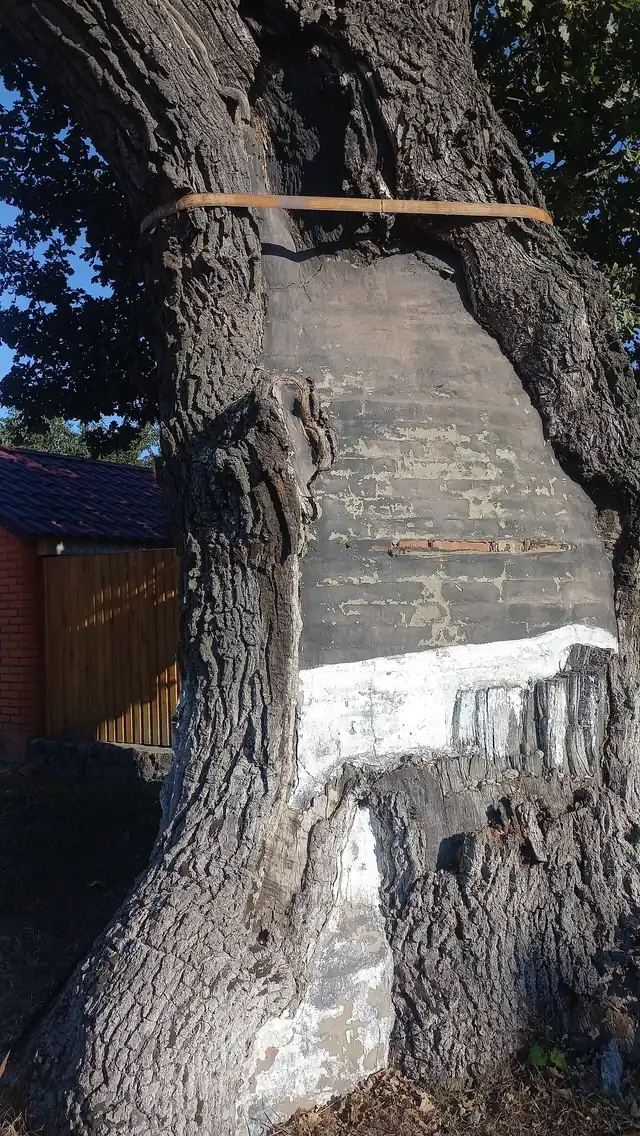

Can I prune an oak in spring?
Avoid it. Texas A&M Forest Service advises against pruning or wounding oaks from February through June, because any fresh wound can let oak wilt in.[1]
If a storm breaks a limb in that window, treat the wound right away, and call a certified arborist if you are unsure whether the tree is infected.[2][1]
What oak wilt is and why timing matters
Oak wilt is a fungal disease that kills oaks. Beetles carry it from infected trees to fresh wounds on healthy ones, which is why a cut at the wrong time can be an invitation.[3] The Forest Service says any new wound, including damage from lawnmowers, string trimmers and storms, can be an entry point.[1]
The City of San Marcos calls February through June the high-risk period in its own tree-protection specification.[2] The City of Wimberley gives the same warning on its stewardship page.[3] So three public sources agree on the window.
Why live oaks are the special case
Live oaks pass oak wilt through interconnected roots. The Forest Service says that is responsible for most spread and tree deaths in Central Texas.[1] Underground movement averages about 75 feet per year.[1] A diseased tree can infect neighbors in a row of live oaks without any beetle at all.
Red oaks behave differently. They can die in as little as a month after infection, while live oaks have intermediate susceptibility.[1] In practice, a neighbor's sick red oak is a warning sign for your live oaks nearby.
Local note
If you are unsure whether a tree has oak wilt, the Forest Service advises contacting a certified arborist.[1]
A practical pruning calendar
| Period | Oak pruning | Notes |
|---|---|---|
| February through June | Avoid | High-risk beetle period[1][2] |
| July through January | Safer window for needed cuts | Still treat any wound |
| Any storm break | Cut cleanly as soon as safe | Treat the fresh wound at once |
The table is a planning aid, not a promise that any month is risk free. If a limb breaks in spring, clean the cut and treat it right away rather than waiting for fall. The city specification also requires damage to oaks to be treated immediately to reduce oak wilt risk.[2]
What to do about the cut
The Forest Service says to paint oak wounds at any time of year. This makes fresh wounds less attractive to insects.[1] The city specification says to dress cuts immediately.[2] Use clean, sharp tools, and do not leave large stubs.
Who should cut
For a tree near buildings or lines, hire someone with the right training. The city's tree-protection specification, written for permitted development, requires a qualified arborist to supervise pruning.[2] A homeowner project is not covered by that spec, but the standard is a useful one to ask a provider to meet.
Ask any provider these questions before work starts:
- Will the cuts happen outside February through June?
- How will the wounds be treated, and how soon?
- Are the tools cleaned between trees?
- Who removes the debris, and where does it go?
Protecting roots during other work
Oak wilt is not the only risk. Compaction and grade changes harm root zones. The city specification puts protective fencing at the outer limit of the critical root zone, to prevent compaction and grade changes greater than 4 inches.[2] Its Type A fencing is at least five-foot chain link with steel or T-post supports.[2]
Where fencing has to sit closer to construction, the spec calls for organic mulch 8 inches deep in the unprotected root zone area.[2] That figure is for construction near preserved trees, not a homeowner mulch rule. For ordinary beds, the Texas Water Development Board advises three to four inches around trees. It should be applied in a V shape and thicker away from the bark, so moisture does not rot the trunk base.[4]
Any trenching near a large oak deserves the same care. Ask whoever digs to route it away from large roots, and treat any cut root as a wound.
Planting around oaks
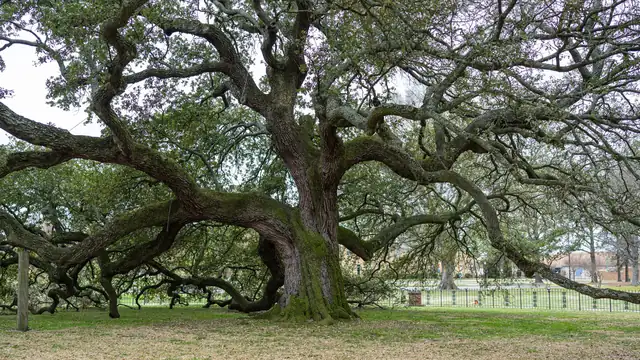
Do not pile soil or mulch against a trunk. Choose plants that tolerate dry shade and a little leaf litter. The native plant landscaping page and the xeriscape plant list cover options. AgriLife lists live oak, Spanish oak and chinkapin oak among the region's native trees.[5]
For new trees and shrubs, see tree and shrub planting, including hole size, depth and watering in the first year.
Yard waste from pruning
Brush must go somewhere. San Marcos runs a brush drop-off on the second Saturday of each month for residential garbage customers, and the material is mulched.[6] It does not take commercial material, so a hired crew cannot use it for your yard.[6] Bulk brush set out at the curb must be no longer than 4 feet, each piece under 5 inches in diameter, bundled and tied.[7]
Law and cost notes
Applying any pesticide for hire needs a Texas Department of Agriculture license, which matters if a provider offers a chemical treatment.[8] A written price helps. The Texas Attorney General advises getting bids from more than one contractor, in writing, with detail on what will be done.[9] See the landscaping cost page for national ranges and the local rules page for city rules.
The short version
- Avoid pruning or wounding oaks from February through June.
- Treat any wound right away, in any month.
- Protect root zones from compaction and grade changes.
- Call a certified arborist if a tree looks sick.
The seasonal yard calendar places these rules next to the other seasonal jobs.
Send a request
Sources
- Texas A&M Forest Service. Prevent the spread of oak wilt this spring in Texas, published 2022-03-29
- City of San Marcos. Item 610S Preservation of Trees and Other Vegetation, published 2018-12-07
- City of Wimberley. Environmental Stewardship, accessed 2026-11-23
- Texas Water Development Board. Texas Landscape Water Guide, accessed 2026-11-23
- Texas A&M AgriLife Extension. Native plants for Edwards Plateau landscapes, published 2023-03-01
- City of San Marcos. San Marcos Monthly Brush Drop-Off Event, accessed 2026-11-23
- City of San Marcos. Bulk Waste Pick-Up form, accessed 2026-11-23
- Texas Department of Agriculture. Applying Pesticides to Ornamentals, Trees, Lawns, or Weeds, accessed 2026-11-23
- Office of the Texas Attorney General. How to avoid home improvement scams, accessed 2026-11-23