On this page (12 sections)
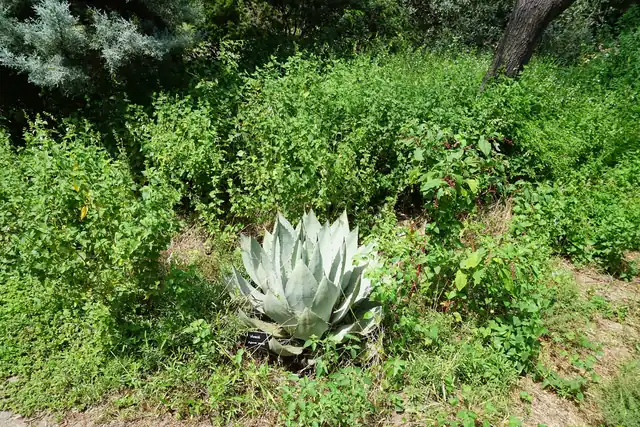

Do xeriscape plants need any water?
Yes, while they establish. AgriLife says new trees and shrubs need frequent watering until well rooted, which may take two growing seasons.[3] After that, TWDB says established plants do well in summer on watering about once a week, especially with mulch around them.[4]
How to read this list
The plants below are the ones named in the AgriLife guide, grouped by form. Mature size and bloom time vary with soil and rain. Treat the list as a starting point and confirm each plant's needs before you buy. The site passes no price of its own for any plant.
A USDA-based hardiness lookup puts ZIP 78666 in zone 9a, with an average annual extreme minimum of 20 to 25 F.[5] NOAA normals show about 36.55 inches of rain a year and 19.8 nights at or below 32 F.[1] Plants must handle both heat and an occasional hard freeze.
Native trees
AgriLife names live oak, Spanish oak, little walnut, Texas mulberry, netleaf hackberry and chinkapin oak among the region's native trees.[2] The oaks are the backbone of many yards. They come with a rule: do not prune them from February through June, because of oak wilt.[6] Read oak wilt and pruning before you plan any limb work.
Small trees and large shrubs
Texas mountain laurel is an evergreen shrub or small tree, usually 10 to 15 feet tall at maturity.[2] It suits a corner or a spot against a wall where a full oak would not fit. Allow for that height when you place it under power lines or near a window.
Native grasses
AgriLife lists sideoats and blue grama, little bluestem and Lindheimer muhly among the native grasses.[2] Bunch grasses give texture to a bed without needing a mower. They are also the natural partner for gravel and stone, which is where rock and gravel landscaping and native plant landscaping overlap.
Buffalograss is the lawn-style native. It suits areas that get 25 inches of rain a year or less and is easily invaded by weeds if watered excessively.[7] More lawn options are in the grass choice guide.
Wildflowers
Texas bluebonnet and Indian blanket are two wildflowers named in the guide.[2] They are annual color, not a permanent structure, so pair them with shrubs and grasses that carry the bed through summer. Scatter seed in fall and let the foliage stay until it has set seed.
Plant by soil, not by wish
Soils across the Edwards Plateau are mostly stony over limestone. A Texas State University survey of one ranch describes a soil with a limestone layer about 13 to 20 inches down, beneath the topsoil and subsoil.[8] That soil is well drained but slowly permeable, and it holds limited moisture.[8] Plants for such a lot must root in shallow ground and tolerate drying.
Other soils are heavy clay. Anhalt clay has very slow permeability and is high in shrink and swell clay over fractured limestone.[8] For heavy clay, AgriLife suggests berms or raised beds with sandy soil and a little organic matter for a rock-loving perennial.[2]
| Soil situation | Typical problem | Planting response |
|---|---|---|
| Thin stony soil over limestone | Dries fast, little depth | Pick small, drought-tolerant natives; mulch well |
| Heavy clay | Drains slowly, cracks when dry | Use berms or raised beds with sandy soil |
| Mixed or unknown | Either | Test the soil before you amend |
TWDB calls a soil test the number one key to establishing and maintaining landscape plants.[4] AgriLife says to test lawn soil every 2 to 3 years through the county Extension office or the Texas A&M lab.[9]
Group by water need
AgriLife's seven Xeriscape principles are planning and design, soil analysis and preparation, practical turf areas, appropriate plant selection, efficient irrigation, use of mulches and appropriate maintenance.[3] In practice that means placing plants of similar water need together, so one irrigation zone does not drown one plant and starve another.
A simple three-zone plan:
- Near the house: a small amount of lawn or groundcover that gets regular water.
- Middle beds: shrubs and perennials on a weekly drip line.
- Outer edge: natives that live on rainfall once established.
AgriLife advises zoning so grass is watered separately and more often than groundcovers, shrubs and trees.[3] Drip is more efficient and more beneficial to plants than sprinklers.[3]
Mulch, the seventh principle
TWDB advises three to four inches of mulch around plants and trees, and says it cuts evaporation. It also says mulch evens soil temperature and reduces erosion and weeds.[4] Pull it back from trunks. Organic mulch also enriches the soil as it breaks down. Details are on the mulch and flower bed care page.
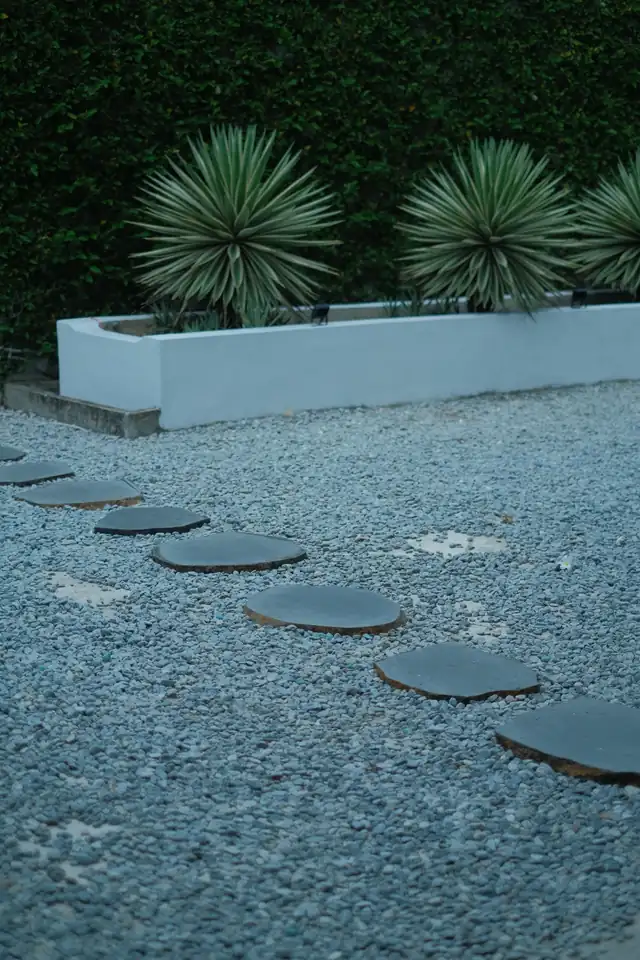
Water during the first year
Drought-tolerant does not mean no water. New plants need regular watering until roots reach beyond the planting hole. Drought stages are the levels of watering limits a city sets as aquifer or lake levels drop. Under Stage 3, as of November 2026, drip and soaker lines get one day per week before 10 a.m. or after 8 p.m. Hand watering is allowed any day in those hours.[10] Plan planting for the cooler months and hand water between drip days. The guide to watering during Stage 3 lists the rest.
Rules that help you
Texas law voids HOA rules that prohibit drought-resistant landscaping or water-conserving natural turf.[11] An HOA may still require a plan for review, so keep your plant list and drawing.[11] San Marcos also encourages drought-resistant plants in its own conservation tips and runs a Soil Saver rebate for aeration and compost top-dressing of lawn areas.[10][12]
What it costs
One national source, in February 2026, listed xeriscaping at $6 to $18 per square foot or more with extensive design plans, a national range.[13] See the landscaping cost page and the xeriscaping page.
Common mistakes
- Planting a mix of thirsty and dry plants in one zone.
- Skipping the soil test.
- Piling mulch against trunks.
- Pruning nearby oaks from February through June.
The local rules page covers licenses, and the seasonal yard calendar says when to plant.
Send a request
Sources
- NOAA National Centers for Environmental Information. 1991-2020 U.S. Climate Normals, annual/seasonal, San Marcos TX (USC00417983), accessed 2026-11-23
- Texas A&M AgriLife Extension. Native plants for Edwards Plateau landscapes, published 2023-03-01
- Texas A&M AgriLife Extension (Texas Water Resources Institute irrigation site). E-447 Xeriscape: water-efficient landscaping, accessed 2026-11-23
- Texas Water Development Board. Texas Landscape Water Guide, accessed 2026-11-23
- phzmapi.org (third-party mirror of USDA plant hardiness zone data). Plant Hardiness Zone Map API, ZIP 78666 (2023 USDA map data), accessed 2026-11-23
- Texas A&M Forest Service. Prevent the spread of oak wilt this spring in Texas, published 2022-03-29
- Texas A&M AgriLife Extension. Turfgrass Selection for Texas (L-5519), published 2010-06-01
- Texas State University (Southwest Texas State University). Soils of the Freeman Ranch, Hays County, Texas (Freeman Ranch Publication Series No. 4-2000), published 2000-07-01
- Texas A&M AgriLife Extension. E-436 Fertilizing Texas Lawns: 10-Point Checklist for Warm-Season Grasses, published 2007-01-01
- City of San Marcos. Water & Energy Conservation (Stage 3 watering restrictions), accessed 2026-11-23
- Texas Legislative Council (Texas Constitution and Statutes). Tex. Prop. Code Sec. 202.007 Certain Restrictive Covenants Prohibited, accessed 2026-11-23
- City of San Marcos. Water Rebate Programs, accessed 2026-11-23
- HomeGuide. How Much Does Landscaping Cost?, published 2026-02-04