On this page (9 sections)
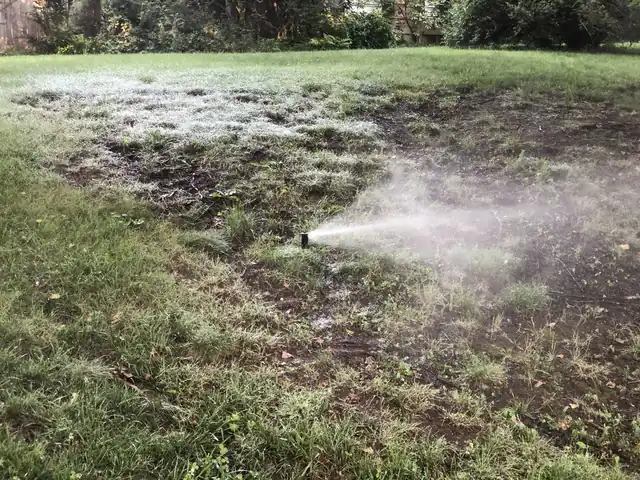
How often can I water in Stage 3?
As of November 2026, San Marcos lets sprinklers run on your designated weekday every other week, either early or late in the day. Soaker and drip lines get one day per week. Hand-held hose or bucket watering is allowed on any day in the same hours.[1]
The three methods and their limits
The city sorts watering by how the water is delivered. A drip line wastes far less than a spray head. As of 2026-11-23, its Stage 3 page lists these rules:
| Method | Stage 3 allowance | Hours |
|---|---|---|
| Sprinklers and automatic systems | One day every other week, on the designated weekday | Before 10 a.m. or after 8 p.m. |
| Soaker hose and drip | One day per week, on the designated weekday | Before 10 a.m. or after 8 p.m. |
| Hand-held hose or bucket | Any day | Before 10 a.m. or after 8 p.m. |
Weekends are off the table for sprinklers. The city publishes a monthly calendar that alternates weeks with no sprinkler use and weeks with use on your weekday.[1] Print it, because the alternation is easy to lose track of.
Where the rules are looser
Some watering is treated more kindly. As of 2026-11-23 the city allows foundation watering with drip, soaker hose or hand-held hose one day per week.[1] Vegetable gardens may be watered by hand, soaker hose or drip any day and any time.[1] Commercial nursery inventory is also exempt, but the page lists no separate exemption for newly installed residential sod.[1]
That last point surprises people. A fresh lawn does not get extra water just because it is new, so timing the install matters. See the sod installation page before you schedule one.
Local note
Stage 3 also bars at-home car washing, filling decorative water features and pools, and washing hard surfaces.[1]
Waste is banned at every stage
Even in a milder stage, wasting water is not allowed. The city lists puddling or runoff, broken or misaligned sprinkler heads, and unrepaired leaks as waste.[1] A head that sprays the sidewalk is a violation, not just a nuisance.
Walk your zones once a month while they run:
- Look for heads that spray the street, fence or wall.
- Look for geysers, soggy spots and low pressure, which point to a leak.
- Check that every zone starts and stops at the time you set.
- Replace clogged drip emitters and watch for chewed tubing.
The city's own conservation tips ask residents to check and adjust sprinkler heads.[1] Replacing an existing controller on an automatic system also triggers a state rule for a rain or moisture sensor.[2]
Keeping plants alive on limited days
The goal is deep, infrequent watering. An AgriLife lawn calendar written for East Texas says to soak lawns to a depth of four inches and avoid frequent shallow watering.[3] Shallow roots fail first in a dry spell, so a weekly deep soak beats a daily sprinkle even when the rules allow more.
Water at the right hour
The Texas Water Development Board says the best time to water is early morning or late evening, when wind is calmer and evaporation lower.[4] That matches the city's hours, so the rule and the science point the same way.
Mulch is the cheapest rainfall
TWDB advises three to four inches of mulch around plants and trees, and says it cuts evaporation. It also says mulch evens soil temperature and reduces weeds.[4] Keep mulch off tree trunks. On a weekly schedule, a good mulch layer is often the difference between wilting by Wednesday and holding until the next watering day. See mulch and flower bed care.
Stop watering too much
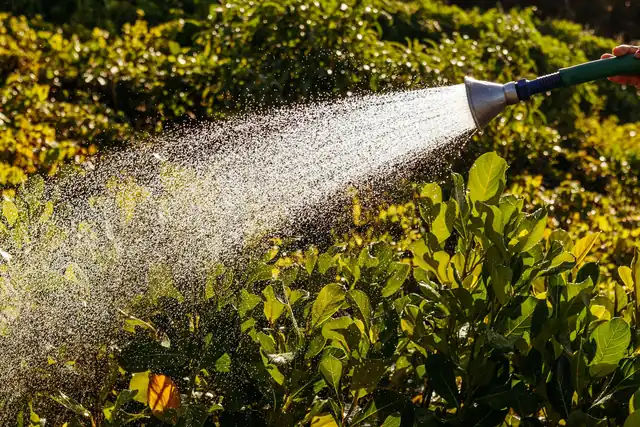
AgriLife points out that the greatest water waste in a landscape is applying too much too often.[5] Under restrictions this rule is easy to follow. The harder habit is to resist adding extra water on the allowed day to make up for missed days. That causes runoff, which is waste.
Zoning: grass on its own line
A good irrigation layout puts lawn on separate zones from shrubs and trees. AgriLife advises zoning so grass is watered separately and more often than groundcovers, shrubs and trees.[5] When a stage cuts you to one day, separate zones let you give the trees a long drip cycle and the lawn a short one.
The City of San Marcos lists a spray-zone conversion to drip or point-source emitters on its Water Rebate Programs page. The program requires the work to be done by a Texas licensed irrigator or by the owner.[6] Texas law makes it a Class C misdemeanor to install an irrigation system without a license.[2]
Why stages exist
San Marcos Springs flows from the Edwards Aquifer, and the aquifer authority declares its own stages. The Edwards Aquifer Authority's live page, updated 2026-11-22, showed the San Antonio Pool in Stage 2 with a 30% reduction. It showed San Marcos Springs at 88 cubic feet per second.[7] City stages and aquifer stages are separate decisions, so a city can stay restricted after rain.
NOAA normals show about 36.55 inches of rain a year here, with July down to 2.21 inches and 21.4 days at 100 F or more.[8][9] Heat, not rain, drives summer water needs. Plan plants that cope with it. The xeriscape plant list and the grass choice guide show how.
Checklist before your next watering day
- Confirm the stage on the city's conservation page, because it can change without notice.
- Find your designated weekday and mark the sprinkler calendar.
- Set controllers to run before 10 a.m. or after 8 p.m. only.
- Fix any broken heads or leaks before the run, not after.
- Hand water new plants and foundation beds between zone days, within the rules.
Where to go next
The local rules page covers licenses and the city's other rules. Costs for irrigation work are on the landscaping cost page.
Want help planning a drought-tolerant yard?
Calls will be recorded.
Send a request
Sources
- City of San Marcos. Water & Energy Conservation (Stage 3 watering restrictions), accessed 2026-11-23
- Texas Commission on Environmental Quality. RG-470 Landscape Irrigator's Rule Compilation (Feb 2021), published 2021-02-01
- Texas A&M AgriLife Extension. Lawn Maintenance Guide, accessed 2026-11-23
- Texas Water Development Board. Texas Landscape Water Guide, accessed 2026-11-23
- Texas A&M AgriLife Extension (Texas Water Resources Institute irrigation site). E-447 Xeriscape: water-efficient landscaping, accessed 2026-11-23
- City of San Marcos. Water Rebate Programs, accessed 2026-11-23
- Edwards Aquifer Authority. Critical Period/Drought Management (CPM), published 2026-11-22
- NOAA National Centers for Environmental Information. 1991-2020 U.S. Climate Normals, annual/seasonal, San Marcos TX (USC00417983), accessed 2026-11-23
- NOAA National Centers for Environmental Information. 1991-2020 U.S. Climate Normals, monthly, San Marcos TX (USC00417983), accessed 2026-11-23